
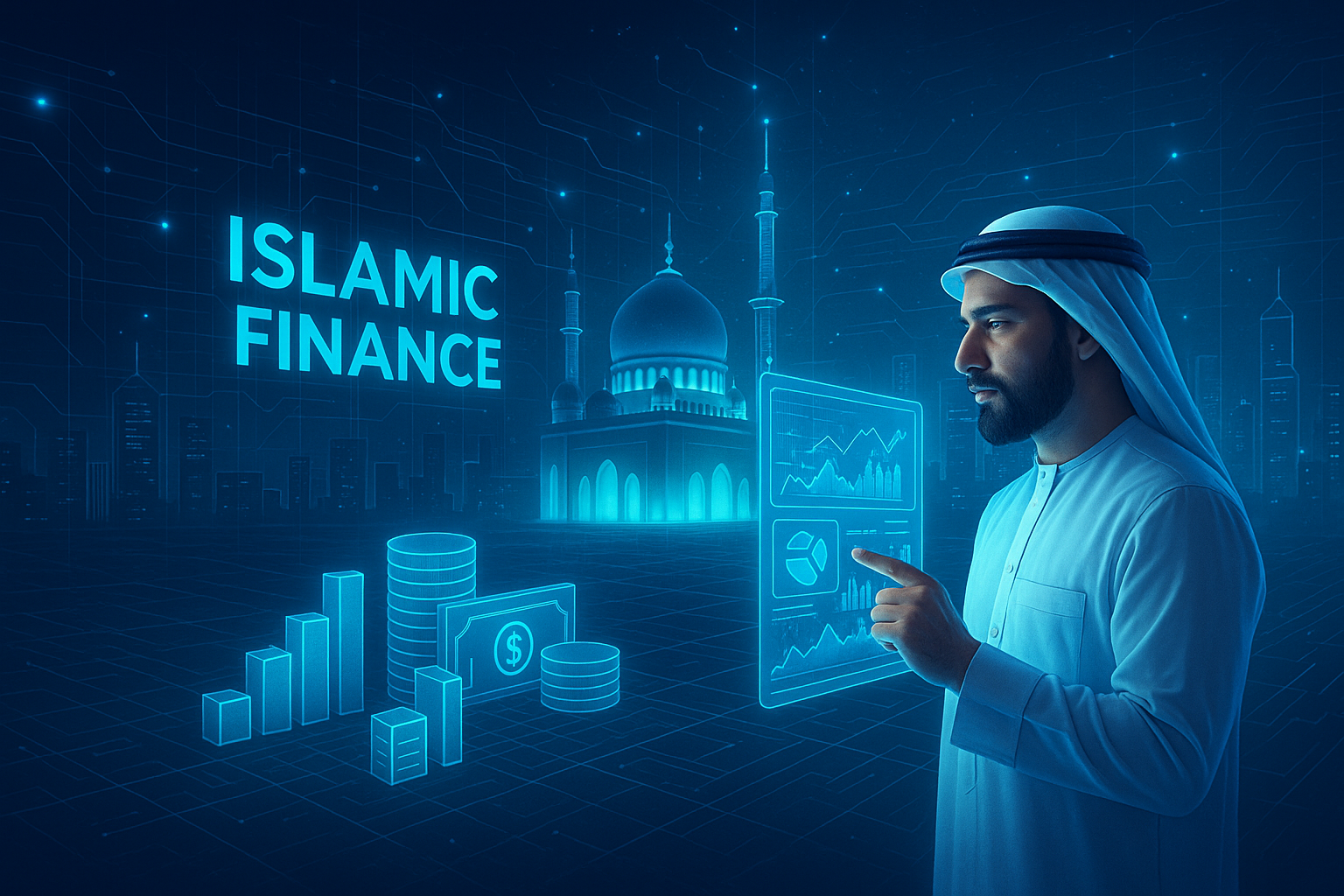
Islamic investment is a way of investing money according to the principles of Shariah (Islamic law). It focuses on ethical, transparent, and interest-free financial practices. Even though it originates from Islamic teachings, it has become popular among both Muslims and non-Muslims because it promotes moral investing and social responsibility.
In simple words, Islamic investment means earning profit in a Halal (permissible) and fair way without exploiting others. Let’s understand this concept step by step in the easiest possible way.
1. Core Principles of Islamic Investment
Islamic finance follows five major rules:
✅ 1. No Interest (Riba)
Earning or paying interest is strictly prohibited in Islam. Traditional bank loans, bonds, and savings accounts with guaranteed interest are not allowed.
Instead: Islamic finance uses profit-sharing, leasing, and partnership models.
✅ 2. No Gambling or Uncertainty (Gharar & Maysir)
Investments that are highly speculative or based on luck are forbidden.
❌ Day trading & pure speculation
❌ Derivatives like options/futures (in most cases)
✅ Investments must be based on real assets and real economic activity.
✅ 3. No Haram Businesses
Companies involved in the following are not allowed:
- Alcohol
- Gambling/Casinos
- Pork products
- Conventional banking/insurance
- Adult entertainment
- Weapons (in some opinions)
- Tobacco (in some opinions)
✅ 4. Risk Sharing
Both investor and entrepreneur share profit AND loss. This ensures fairness and partnership instead of exploitation.
✅ 5. Asset-Backed Transactions
Every financial activity should be backed by tangible assets like land, buildings, products, or services.
2. Why Islamic Investment is Growing Worldwide
Islamic finance is now a $3 Trillion+ global industry.
Why are people choosing it?
✅ Ethical and transparent
✅ Stable and long-term focused
✅ Avoids high-risk speculation
✅ Popular in Middle East, Malaysia, UK, USA, India
✅ Attracts even non-Muslim socially responsible investors
It is often compared to ESG (Environmental, Social, Governance) investing, which also promotes ethical finance.
3. Types of Islamic Investment Products
Let’s look at the most common Halal investment options in the market today:
✅ 1. Islamic Stocks (Equities)
Invest in companies that:
- Have Halal business activity
- Have low interest-based debt (usually <33%)
- Do not keep too much interest-based cash
Shariah-compliant stock screening is required.
✅ 2. Sukuk (Islamic Bonds)
Sukuk are not loans with interest.
They are ownership in real assets that generate profit.
Example: Government issues Sukuk to build a highway. Investors earn profit from toll revenue.
✅ 3. Mudarabah (Profit Sharing)
One partner provides capital, the other provides expertise.
Profit is shared as per agreement.
Loss is borne by the investor unless due to negligence.
✅ 4. Musharakah (Partnership)
All partners contribute capital and share profit and loss fairly.
✅ 5. Ijarah (Leasing)
Similar to rent or lease-to-own.
Example: Islamic home finance uses Ijarah instead of mortgage.
✅ 6. Islamic Mutual Funds / ETFs
Professionally managed funds that invest only in Shariah-compliant assets.
📌 (Insert Image Here – Stock Photo of Islamic Finance / Mosque + Investment / Ethical finance concept)
Example caption:
“Islamic investment combines ethical values with financial growth.”
4. Difference Between Conventional and Islamic Investment
| Feature | Conventional Finance | Islamic Finance |
|---|---|---|
| Interest | Allowed | Prohibited |
| Risk Sharing | Rare | Essential |
| Gambling/Speculation | Sometimes Allowed | Forbidden |
| Asset-Backed | Not always | Must be |
| Ethics | Optional | Mandatory |
| Transparency | Varies | Highly Required |
Islamic finance is more moral, asset-based, and partnership-oriented.
5. Benefits of Islamic Investment
✅ Ethical & Responsible – No involvement in harmful industries
✅ Stable & Low-Risk – Focus on real assets
✅ Fair Distribution – No exploitation through interest
✅ Diversification – Worldwide options available
✅ Spiritually Rewarding – Halal income brings Barakah
✅ Trusted by Millions – Global regulatory bodies verify compliance
6. Challenges of Islamic Investment
Every system has limitations. Some common challenges are:
❌ Limited availability of products in some countries
❌ Requires Shariah screening and certification
❌ Some Islamic products are misunderstood
❌ Monitoring compliance is time-consuming
❌ Performance may differ from conventional funds
However, technology and global demand are solving these issues fast.
7. How to Start Islamic Investing (Step-by-Step)
Here’s a simple roadmap:
✅ Step 1: Learn the Basics
Understand Riba, Gharar, Halal sectors, and profit-sharing models.
✅ Step 2: Set Financial Goals
Are you investing for:
- Short term?
- Long term?
- Retirement?
- Business?
✅ Step 3: Choose Halal Investment Options
Examples:
- Shariah-compliant stocks
- Sukuk
- Islamic mutual funds or ETFs
- Real estate
- Gold/Silver
✅ Step 4: Use Halal Screening Criteria
Make sure the company:
- Has halal core business
- Has debt <33%
- Has non-liquid assets ≥20%
- Has non-compliant investments <33%
- Market cap > net liquid assets
✅ Step 5: Take Advice from Experts
Prefer Shariah-certified platforms or advisors.
✅ Step 6: Monitor Regularly
Companies may change activities. Regular screening is necessary.
8. Who Provides Shariah Certification?
Some global Shariah boards include:
✅ AAOIFI (Bahrain)
✅ IFSB (Malaysia)
✅ Dow Jones Islamic Index
✅ MSCI Islamic Index
✅ FTSE Shariah Index
Many local Islamic scholars also certify products based on their country’s regulations.
9. Is Islamic Investment Only for Muslims?
No!
Many non-Muslims invest in Islamic products because they love:
✅ Ethical standards
✅ Lower risk
✅ Transparency
✅ Real asset backing
Islamic finance is not just religious—it’s smart, moral, and sustainable.
10. Future of Islamic Investment
The future looks very bright:
- Rapid growth in Asia, Middle East, and Africa
- Islamic fintech startups emerging
- Halal investment apps and robo-advisors
- Governments launching Sukuk and Islamic funds
- Global ESG and Islamic finance collaboration
Experts predict the industry may reach $6 Trillion+ by 2030.
Conclusion
Islamic investment is more than just avoiding interest—it is a complete ethical financial system based on fairness, transparency, and real economic value. It promotes partnership over exploitation, responsibility over speculation, and asset-backed profit over risky gambling.
Whether you are Muslim or non-Muslim, if you believe in honest, socially responsible investing, Islamic finance can be a powerful and profitable choice.
Halal + Ethical + Profitable = Islamic Investment